Source–site–structure simulation
Connecting fault rupture, wave propagation and local sites to study how earthquakes load engineering structures.
Physical sources · Spatial variability · High-performance computing
Chao Luo | Shijiazhuang Tiedao University
Earthquake response of bridges, fault-crossing tunnels and underground structures.
Connecting seismic sources, local sites and structural behaviour through simulation.
RESEARCH
Connecting fault rupture, wave propagation and local sites to study how earthquakes load engineering structures.
Physical sources · Spatial variability · High-performance computing
Understanding structural deformation under complex terrain effects and fault displacement, and the influence of seismic input methods.
Mountainous bridges · Subsea tunnels · Underground structures
Combining dynamic analysis and performance assessment to investigate isolation systems, materials and infrastructure.
Isolation and damping · Fragility · Low-carbon design
Using the Second Jiaozhou Bay Subsea Tunnel as a case study, the paper compares six alignments. In these cases, the 42° alignment has the lowest shear strain but relatively high normal strain; the 57° alignment has the highest equivalent strain.
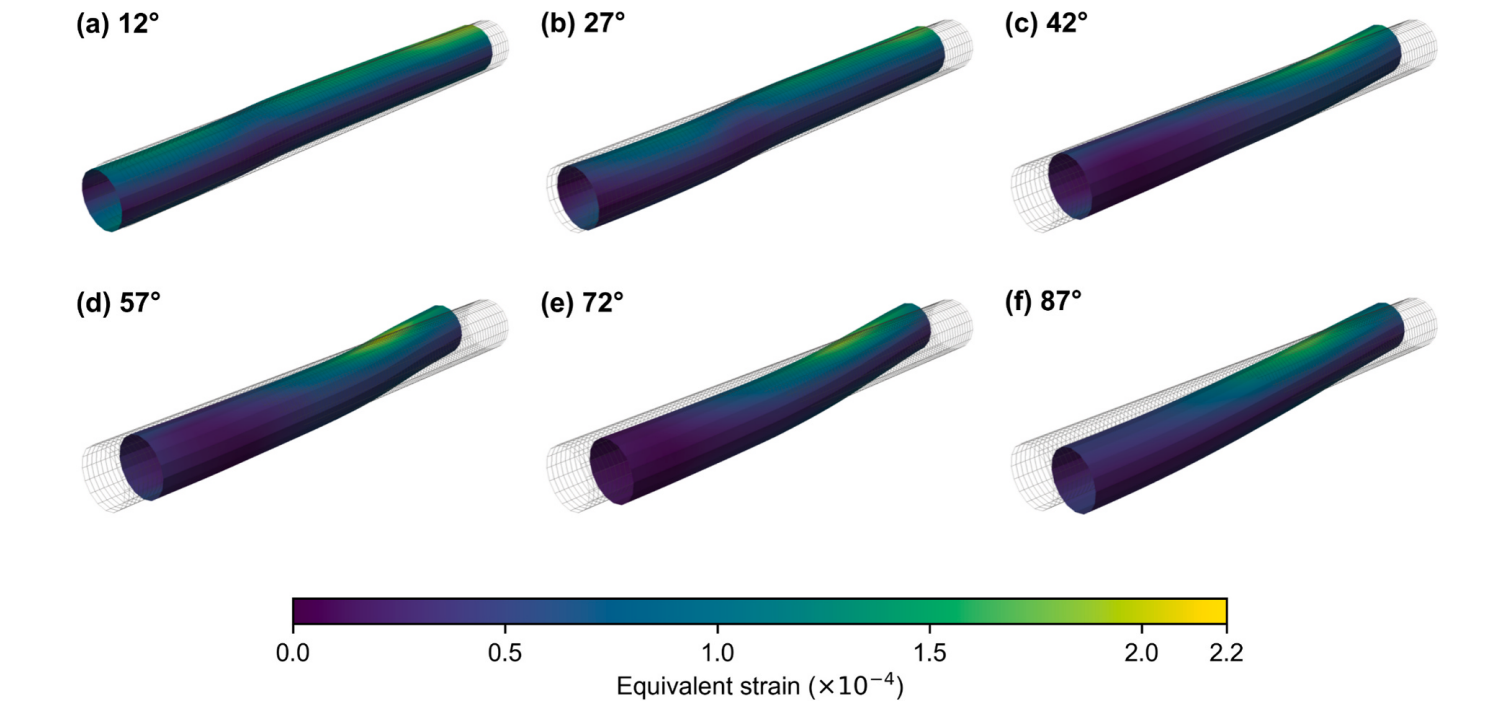
Intersection angles: 12° / 27° / 42° / 57° / 72° / 87°
The source and regional-site models remain fixed while the tunnel alignment changes. The comparison considers spatially varying ground-motion inputs and lining deformation.
PUBLICATIONS
Yang Gao, Ke Zhang, Hao Wang, Zerui Ji, Chao Luo*. Tunnelling and Underground Space Technology, 179, 108146.
Tunnel–fault angle and spatial sampling affect the deformation mode of a large-span fault-crossing subsea tunnel. * Corresponding author.
Publication detailsFei Xu, Ke Zhang, Xiangbo Bu, Hemin Zheng, Hao Wang, Chao Luo*. Bulletin of the Seismological Society of America, published online, 1–15.
A unified cutoff frequency consistently separates regional near-fault ground motions into dynamic and fault-slip-induced components. * Corresponding author.
Publication detailsLuo C, Du H, Du Y, Bu X, Xu F, Zheng H, Wang H, Ji Z. Tunnelling and Underground Space Technology, 176, 107885.
DOIWang H, Lu W, Tian W, Qiao W, Luo C. Earthquakes and Structures, 30(5), 591-609.
PublicationsRESEARCH NOTES
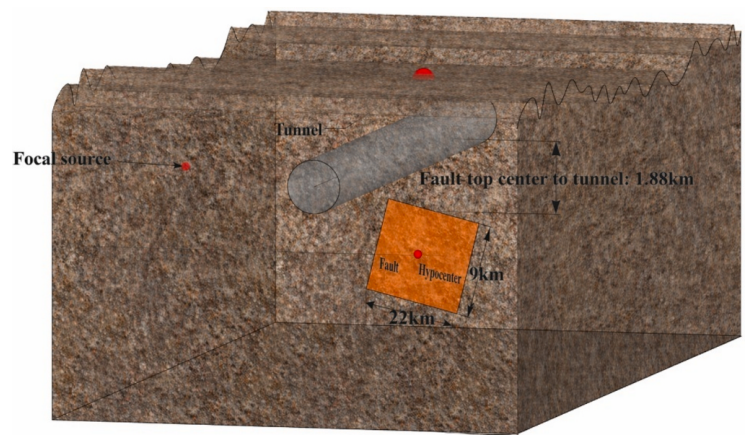
Six tunnel alignments reveal how normal and shear strains combine.
Read full note ↗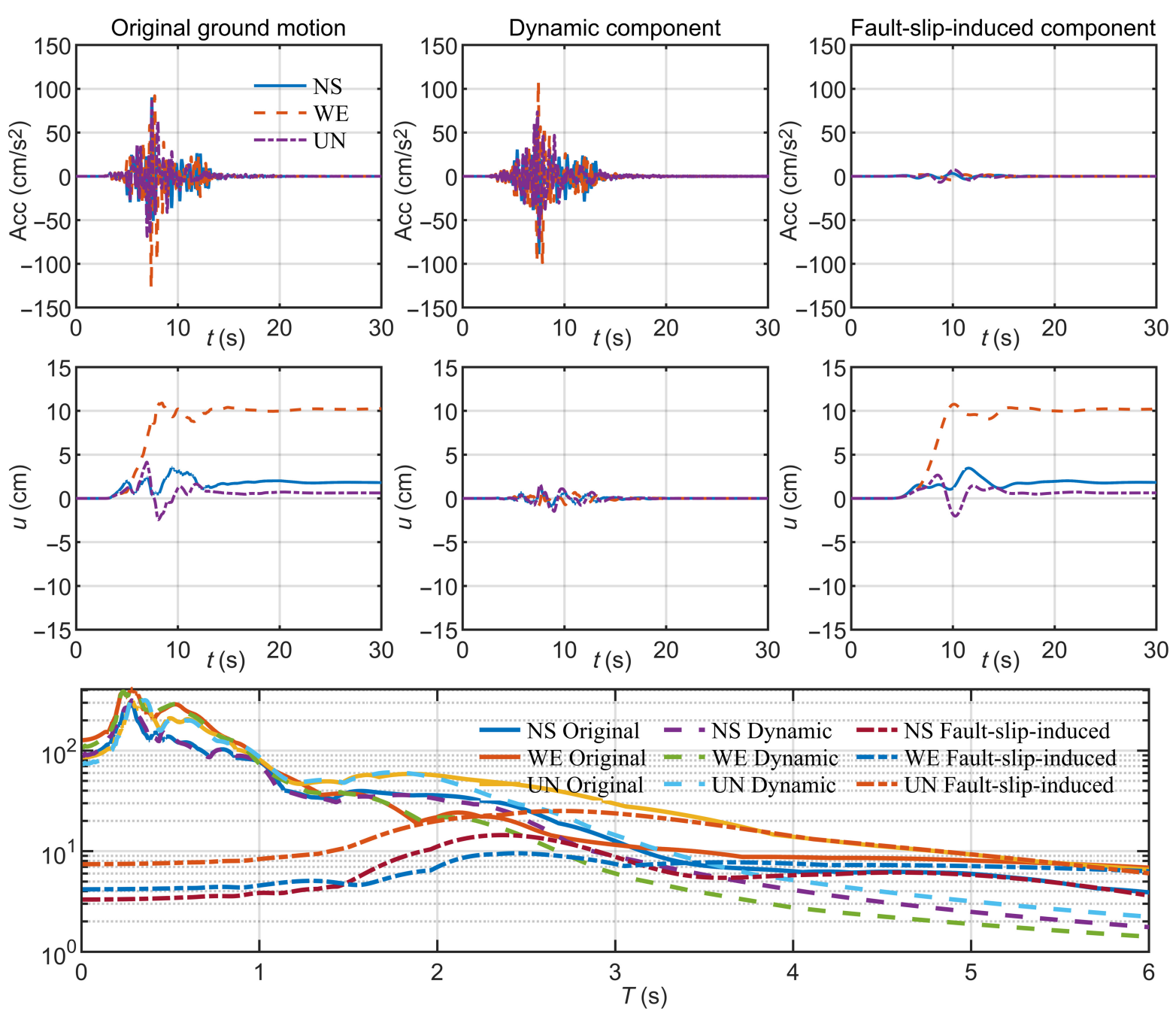
A consistent method separates dynamic motion from fault-slip-induced movement across a region.
Read full note ↗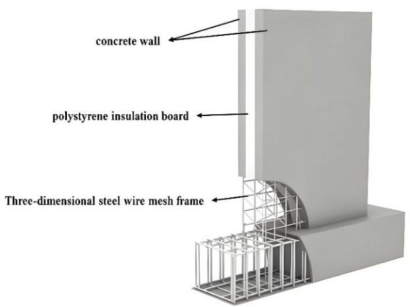
Linking structural performance and material use in wire-mesh concrete sandwich walls.
Read full note ↗
ABOUT
Lecturer and Master’s Supervisor · School of Civil Engineering, Shijiazhuang Tiedao University
My research focuses on physics-based source–site–structure seismic response analysis, structural resilience and high-performance computing, with applications in bridges, tunnels, underground structures and civil infrastructure.
CONTACT
For research discussions, graduate study and academic collaboration, please contact me by email.